


What makes a curated apothecary collection meaningful is not the number of products in it, but how well its items fit the routines you already enjoy. The word “apothecary” can mean different things from one shop to another, and an appealing description doesn’t always explain what an item is or how it might fit into your day. It’s natural to want a distinctive selection that feels personal without relying on sweeping wellness promises.
A considered collection is less about having more and more about choosing with intention. In this guide, you’ll learn what to look for, how to check practical product details, and how to decide whether an item belongs in your routine. The goal is a collection shaped by your habits and preferences, not someone else’s checklist.
We’ll cover how to browse thoughtfully, which details to check in product descriptions, and how FORMA’s Apothecary category sits alongside its Rituals offerings. FORMA curates lifestyle goods sourced from over a dozen countries, but specific products and details can vary. Reviewing current listings can help you decide what suits you and leave room for personal expression.
Key Takeaways
- A curated apothecary collection is a retailer-selected assortment. Look beyond the category label to understand what each item is and whether it fits your routine.
- Start with a habit you already have, then consider preferences such as scent, texture, format, storage, and relevant sensitivities.
- Compare collections by clarity, useful product details, curation, and personal fit, not by the number of items.
- Consider one well-described item within an existing routine before building a larger collection. Notice what suits you without expecting a particular outcome.
- FORMA’s Apothecary and Rituals categories offer ways to explore lifestyle goods sourced from over a dozen countries. Check current listings for item-specific details.
What a curated apothecary collection can bring to everyday rituals
A curated apothecary collection is an assortment a retailer has selected and grouped under an apothecary category. Its contents and meaning vary by shop. The label alone doesn’t confirm an item’s ingredients, materials, or intended use, so treat it as a starting point for browsing rather than a full product description.
The word has a longer history than its modern retail use. An apothecary traditionally prepared and dispensed medicinal substances, as outlined in this overview of the historical roots of the apothecary. Today, retailers may use the term more broadly for lifestyle goods. Because definitions differ, read each listing instead of assuming every shop uses the category in the same way.
What does an apothecary collection include?
There’s no universal checklist. Depending on the retailer, an apothecary assortment may bring together products with different forms, materials, or purposes. Check the individual listing for details such as ingredients, materials, directions or intended use, and any care or storage guidance provided. This makes it easier to separate product information you can verify from the mood or imagery used to present it.
Apothecary goods and ritual accessories can overlap, but they aren’t automatically the same. A retailer may group an item under apothecary because of its product type, while someone may use it as a ritual accessory because they include it in a repeated practice. The same object might serve both roles for one person and neither for another.
How can a collection make daily rituals feel personal?
A physical object can give a routine a recognizable beginning or ending. You might place a chosen item near the spot where you pause in the morning, or reach for it while preparing to wind down. Its value doesn’t have to depend on a health or spiritual promise. You may simply enjoy its scent, texture, appearance, or place in your space.
Start with a routine you already appreciate, then consider what would feel natural alongside it. A preference for a subtle scent, a particular texture, or an easy-to-store format may matter more than a retailer’s suggested ritual. If product sensitivities are relevant to you, check the available ingredients and instructions before choosing.
There’s no required sequence or ideal collection size. A familiar object may become part of a ritual through repetition, while another may not suit you. Think of curation as an invitation to explore, not a rulebook for how everyday moments should feel.
How to choose apothecary items around your own routine
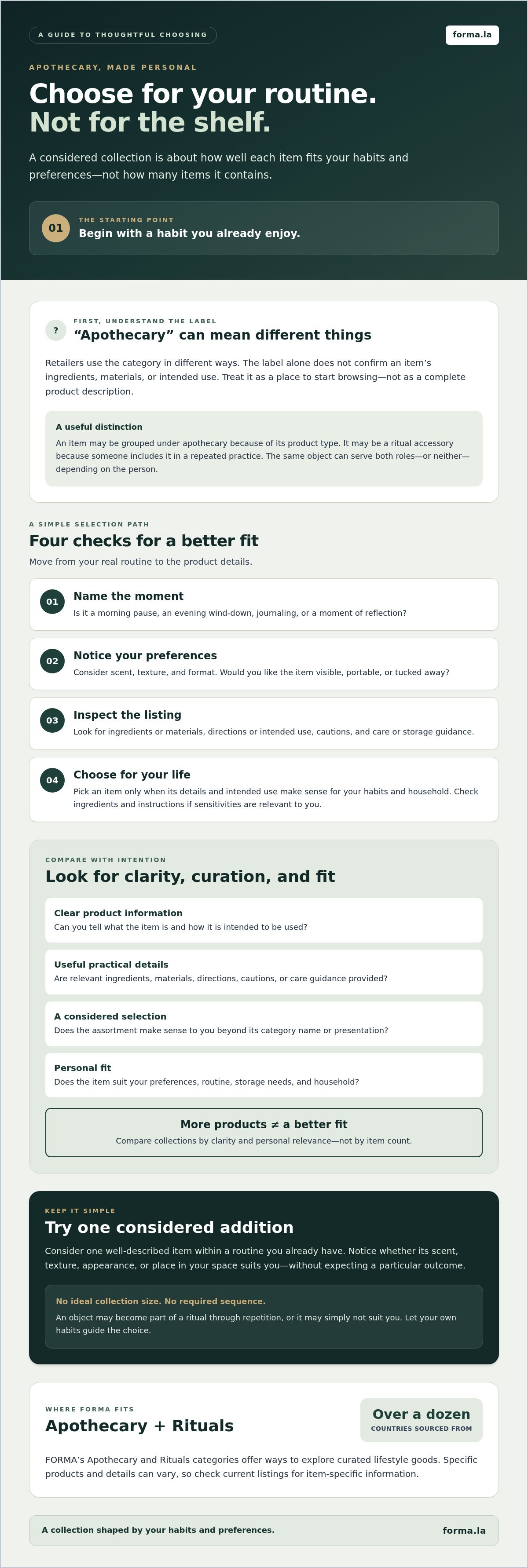
A considered choice starts with your actual day, not an idealized routine or a universal starter set. Use this framework to decide whether an item belongs in a moment you already value:
- Name the routine. Is it a morning pause, an evening wind-down, journaling, or a moment of reflection?
- Identify your preferences. Consider scent, texture, and format, as well as whether you want an item to be visible, portable, or tucked away.
- Inspect the details. Read the product page for ingredients or materials, directions, cautions, and care information.
- Choose for fit. Select an item only if its details and intended use make sense for your habits and household.
Start with the moment you want to create
Let your existing habits set the direction. If you already write in a journal after dinner, consider what would feel natural to have nearby rather than adding steps to a routine you don’t keep. You might prefer a clear surface or enjoy a particular scent in your surroundings. These are personal preferences, not promises of a specific emotional or wellness effect.
If a listing uses aromatherapy language, distinguish its description from a health claim. The University of Minnesota’s overview of the therapeutic application of plant essential oils offers context for the subject. Assess the individual product information and decide whether its stated use suits you.
Read product details before adding an item
Product photos and category labels can suggest a mood, but practical details help you make an informed choice. Check the current listing for ingredients, materials, directions, cautions, and care guidance. Consider your fragrance preferences, personal sensitivities, storage needs, and whether the item’s use makes sense in your household. If an important detail is missing or unclear, ask the retailer to confirm it before choosing.
Keep your first choice modest. One clearly described item that complements an existing routine is easier to assess than a collection assembled around assumptions. Notice whether you enjoy its format and whether it fits comfortably into your day. You don’t need to follow a prescribed sequence or buy a set of items to make a ritual your own.
To see how a retailer organizes its selection, explore FORMA’s apothecary and ritual offerings. Check current product pages for item-specific information, since listings and details may vary.
Compare apothecary collections by curation, clarity, and fit
A larger assortment may give you more options to browse, but it isn’t automatically more thoughtful or easier to shop. Compare how clearly a retailer presents its selection and whether the available details help you decide what suits you. Focus on information you can check rather than how impressive a collection sounds.
| What to compare | Look for | Ask yourself |
|---|---|---|
| Assortment clarity | Easy-to-understand categories and descriptions that distinguish item types or purposes. | Can I tell what’s included without guessing from the category name? |
| Product information | Item-specific ingredients or materials, directions, care guidance, and relevant cautions. | Does the listing answer practical questions I have? |
| Curation | A selection that feels coherent and supports browsing without overwhelming you. | Can I see a reason to explore this assortment beyond its size? |
| Personal fit | Details that help you consider your routine, preferences, and household. | Would this item suit how I actually live? |
What makes a collection feel thoughtfully curated?
Thoughtful curation shows in how a retailer organizes and explains its assortment. Clear categories help you move through the selection, while useful descriptions show how items differ. Claims about rarity, craftsmanship, or origin may add context, but look for details about the specific item rather than relying on evocative wording alone. A well-organized selection can invite discovery without making every option feel essential.
Which product details help you compare options?
Read aesthetic language alongside practical information. Compare stated ingredients or materials, directions for use, care instructions, and relevant cautions. If a retailer gives an item’s origin, check whether the information applies to that specific product. Broad claims about purity, sustainability, ethical sourcing, or outcomes need supporting details; don’t treat them as established facts without them.
When comparing a curated apothecary collection with another retailer’s assortment, ask whether the information helps you make a considered choice. A smaller range with clear descriptions may be easier to assess than a larger one with limited item details. If a listing leaves a question unanswered, note what’s missing and seek clarification before deciding.
A well-presented collection makes its categories easy to understand, its item details easier to verify, and its options easier to match to your preferences.
Build a considered apothecary ritual without overbuying
A ritual doesn’t need a crowded shelf or a prescribed set of purchases. Begin with one clearly described item that suits a routine you already have, then notice whether its format, use, and place in your space feel right. A considered apothecary ritual grows through personal choice, not pressure to collect more.
Create a simple ritual around an existing habit
Keep the sequence light: pause, prepare your space, then begin an activity you already enjoy. Before journaling, for example, you might clear a small area, place a chosen item nearby if its directions allow, and open your notebook. Change or skip any step that doesn’t suit you. The item is part of the setting, not a promise of medical, psychological, or spiritual effects.
For broader context on how ritual tools may be approached, explore this guide to modern ritual supplies. Whatever you choose, follow the product’s own directions and cautions. For health or safety questions, rely on a qualified professional or another reliable source rather than assuming a retailer’s description covers every circumstance.
Keep a small collection intentional
Before adding something new, take stock of what you already own. Ask whether a prospective item has a clear place in your routine, whether you understand its details, and whether you’ll realistically use it. If you’re unsure, waiting is a useful choice. A smaller group of familiar, purposeful objects may be easier to care for and incorporate than a collection assembled all at once.
After trying an item, notice practical preferences: whether it’s easy to store, whether its scent or texture works for you, and whether its directions fit your habits. These observations can guide future choices without turning a personal ritual into a checklist. If crystals are already part of your interests, you can also explore this crystal meditation guide for additional context.
FORMA lists Apothecary and Rituals among its offerings, though specific items and availability can change. Review current product details before deciding, or explore FORMA’s lifestyle selection as you consider what belongs in your routine.
Explore FORMA's curated apothecary collection with confidence
FORMA is an online boutique that curates lifestyle goods sourced from over a dozen countries. Its offerings include Apothecary and Rituals, giving shoppers two categories to explore for objects that may connect with everyday habits and personal style. Products can change, so read each listing rather than assuming the category name tells you everything about an item.
What to look for while browsing FORMA
Begin with the Apothecary category, then read current product pages for item-specific information. Look for stated ingredients or materials, intended use, directions, cautions, and care guidance. If a detail that matters to your decision isn’t clear, seek confirmation instead of filling the gap with assumptions. This pause can help you put an appealing image or evocative description in perspective.
FORMA’s broader approach to selection is explored in its curated lifestyle shop guide. As you browse, consider what genuinely suits your space, preferences, and existing rituals. A product may catch your eye, but whether it belongs in your everyday life depends on its details and personal fit, not a promise of a particular outcome.
Choose a piece that belongs in your everyday life
Before deciding, return to a few practical questions: Which routine might this item accompany? Do its scent, texture, format, or storage needs suit you? Are its directions and other relevant details clear? If the answers align, it may be worth considering. If not, there’s no need to make it fit.
A thoughtful choice matters more than building a large assortment. Let your interests guide your exploration, and give yourself permission to browse without buying. FORMA’s curated apothecary collection is part of a wider lifestyle selection. Current listings are the place to check availability and review product-specific information.
If you’d like to continue exploring, browse FORMA’s current offerings at your own pace.
Let your next ritual take shape
A meaningful apothecary ritual doesn’t require a long list. Begin with a routine that already matters to you, check an item’s details before choosing, and let personal preferences guide what earns a place in your space. The best curated apothecary collection is one that feels clear, considered, and suited to your everyday life, not one that follows someone else’s rules.
FORMA brings together lifestyle goods sourced from over a dozen countries, with Apothecary and Rituals among its listed offerings. Product selection and availability can vary, so review current listings for details about each item before deciding. Browse at your own pace and focus on what feels relevant to the rituals you already enjoy.
Explore FORMA’s current apothecary offerings and review the product details to find an item that suits your routine.
Frequently Asked Questions
What is a curated apothecary collection?
A curated apothecary collection is an assortment a retailer has selected and grouped under an apothecary category. What it contains depends on the shop, so the label alone doesn’t confirm an item’s ingredients, materials, or intended use. Read each product description and consider how the item might fit your habits. A thoughtful collection offers a way to explore, not a prescribed set of products or a promise of particular wellness or spiritual outcomes.
What might you find in an apothecary collection?
Contents vary by retailer. A shop may group apothecary supplies in this category, while ritual accessories may appear separately or alongside them. The category name isn’t enough to identify a specific item or its purpose. Check current listings for ingredients or materials, directions, cautions, and care information. At FORMA, Apothecary and Rituals are listed as offerings, but check the store’s current pages to see which products are available.
How do I choose items for a personal apothecary ritual?
Start with a routine you already enjoy, such as journaling or taking a quiet pause, then consider what would naturally belong in that moment. Think about your preferences for scent, texture, format, and storage. Before choosing, read the product page for ingredients or materials, directions, cautions, and care guidance. If a detail that matters to you is missing or unclear, seek confirmation rather than making assumptions based on the category name or imagery.
Are apothecary products safe for everyone?
No product can be assumed suitable for everyone. Ingredients, materials, directions, and cautions differ, and individual sensitivities and circumstances matter. Read the item’s current product information, follow its directions, and don’t use it in a way the listing doesn’t describe. If you have a health condition, are pregnant, or have another safety concern, ask a qualified healthcare professional for guidance. Contact the retailer about unclear product details, but don’t treat that as personalized medical advice.
Can I create a simple ritual with just one apothecary item?
Yes. One clearly understood item can be part of a simple routine if it suits your preferences and its directions fit your intended use. You might place it near an existing journaling or reflection habit, where appropriate, and see whether you enjoy having it there. A ritual doesn’t require a full assortment or a set sequence. Keep it flexible, follow item-specific guidance, and let your own experience shape whether it remains part of the routine.
How can I tell whether an apothecary collection is thoughtfully curated?
Look for clear categories and descriptions that help you understand what each item is and how it differs from others. Useful listings provide relevant details such as ingredients or materials, directions, care, and cautions. A coherent selection can invite exploration without overwhelming you, but a large assortment isn’t automatically better. Treat claims about origin, craftsmanship, or other qualities as claims to verify, and judge the collection by its clarity and fit for your needs.
Does FORMA sell a specific apothecary starter set?
FORMA’s listed offerings include Apothecary and Rituals, but the available information here doesn’t confirm a specific apothecary starter set. Don’t assume a named set or bundle is available. Check current store listings to see which items are offered and review each product page before deciding. If you’re beginning a personal ritual, you can start by considering one item that fits an existing habit rather than looking for a prescribed collection.