


What does “artisanal” mean when you’re shopping for artisanal tops and shirts? The phrase can describe different things, from a distinctive silhouette or decorative detail to a traditional technique. A product photo may show a garment’s appearance, but it can’t always tell you how the fabric feels or how the shirt fits. To choose thoughtfully, look beyond the label and assess the details provided for each piece.
A memorable top doesn’t have to be ornate. The right choice is one whose design appeals to you and whose fit and care suit the way you dress. Start with what you like, then check the product information to understand what is actually stated about the garment.
This guide explains how to read product descriptions and images, compare silhouettes, and style a distinctive top for more than one occasion. FORMA’s Tops + Shirts category is part of a wider edit of distinctive goods sourced from more than a dozen countries, offering pieces to explore and make your own.
Key Takeaways
- Artisanal influence can relate to design, technique, construction, or maker traditions. These ideas are not interchangeable.
- Use product descriptions, photos, origin or maker notes, and care guidance to distinguish visible details from explicitly stated claims.
- Compare artisanal tops and shirts by silhouette, fit information, styling range, care, and the garment details provided.
- Build an outfit in a simple sequence: choose the top, establish a base, balance proportions, then add finishing details.
- Explore FORMA’s globally curated Tops + Shirts category for distinctive pieces to make part of your personal style.
What Makes Artisanal Tops and Shirts Distinctive?
Artisanal tops and shirts have design or making details associated with craft, but the label alone doesn’t guarantee that a piece was made by hand. A shirt may have a craft-led design, a named decorative technique, carefully described construction, or a connection to maker traditions. These qualities can overlap, but one doesn’t automatically prove the others.
An artisan is commonly understood as a skilled craft worker. In clothing, that human element is most relevant when a listing names a maker, explains a technique, or describes how the garment was produced. “Artisan-inspired” design and a boutique’s considered selection are different from verified handmade production. Treat the word as a reason to look closer, not as proof on its own.
Does artisanal always mean handmade?
No. The term can refer to a garment’s visual style, a particular technique, its construction, or a maker tradition. A shirt with a decorative motif might be inspired by craft without being handmade. A listing might also identify handwork on one detail without saying the entire garment was made by hand. Curation describes how a boutique brings items together, not necessarily how each piece was produced. Look for garment-specific wording before drawing conclusions.
What details can give a shirt artisan character?
Embroidery, distinctive prints, textured surfaces, and considered finishing can give a shirt an individual look. These are clues to style, not proof of a particular material, origin, or production method. A close-up photograph may show stitching or surface detail, for instance, but it can’t establish who made the garment or which technique was used.
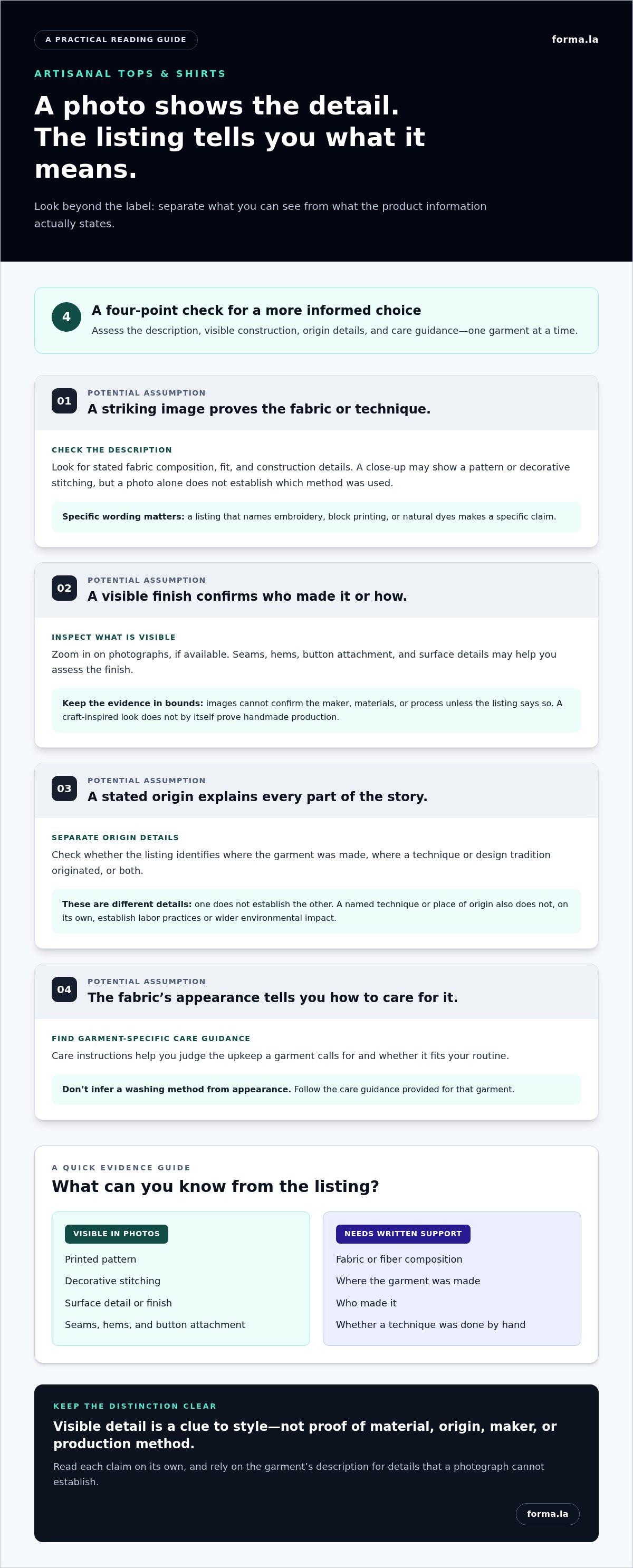
Read the product description alongside the images. Separate what you can observe from what the listing explicitly states:
- Visible: a printed pattern, decorative stitching, or a particular finish shown in the photographs.
- Needs written support: the fabric or fiber, where the garment was made, who made it, and whether a technique was done by hand.
This distinction lets you appreciate a piece’s character without turning an appealing aesthetic into an unsupported story. For any garment, including one in a curated edit, rely on its own description for details about materials, origin, maker, and technique.
How to Assess Craft, Provenance, and Construction
A useful product listing gives you more than an appealing impression. It can help you understand what a garment is made from, how its details are described, where it comes from, and what care it needs. When comparing artisanal tops and shirts, keep visible features separate from claims that need written support.
A four-point checklist
- Read the description. Look for stated fabric composition, fit, and construction details. A listing that names embroidery, block printing, or natural dyes makes a specific claim; a photo alone doesn’t establish which method was used.
- Inspect visible construction. Zoom in on close-up photographs, if available. Seams, hems, button attachment, and surface details may be visible and can help you assess the finish. Images can’t confirm the maker, materials, or process unless the listing says so.
- Separate origin details. Check whether the listing identifies where the garment was made, where a technique or design tradition originated, or both. These are different details, and one doesn’t establish the other.
- Find the care guidance. Care instructions help you judge the upkeep a garment calls for and whether it fits your routine. Don’t assume a washing method from the fabric’s appearance; follow the garment-specific guidance.
Read claims in context
Specific wording matters. “Inspired by” describes a design reference, while a statement that a detail was hand-embroidered describes a production method. Neither phrase, by itself, tells you where the garment was made or who made it. Consider each claim on its own, and don’t extend it beyond what the listing says.
Use the same care with claims about labor practices or environmental impact. A named technique or place of origin doesn’t, on its own, establish how workers were treated, how makers were compensated, or the garment’s wider impact. Look for explicit, garment-specific information rather than filling gaps with assumptions.
Judge artisanal character by specific evidence in the product description and images, not by a label alone. You can appreciate a striking finish while staying clear about which details are visible, which are stated, and which aren’t provided. As you explore FORMA’s Tops + Shirts, use the same thoughtful eye to find a piece whose character and practical details suit you.
How to Compare Artisanal Tops and Shirts for Fit and Wear
A distinctive detail may catch your eye, but a good choice should also work with the rest of your wardrobe. Compare pieces against the same criteria instead of letting a striking photo make the decision for you. A short note on your phone can help you compare fit, care, and how each shirt might work with clothes you already own.
Which silhouette suits your wardrobe?
Consider shape in relation to what you wear most. A relaxed silhouette may layer easily over a close-fitting base; a structured shape can add definition to softer pieces. Cropped lengths pair differently from longer shapes, which may work worn loose or tucked in, depending on the garment and your preference. These are styling options, not universal fit rules.
Use the individual product’s fit description and measurements to judge proportions. If garment measurements are provided, compare them with a similar item you own. Think about where you prefer a top to sit across the shoulders, body, and hem. A size label alone can’t tell you how a particular cut will feel.
What should you compare before choosing a shirt?
Make a quick comparison of the pieces you’re considering. Note the details the product listings provide, then add your own wardrobe preferences:
- Silhouette: relaxed, structured, cropped, or longer, as described or shown.
- Fit information: the listed fit description and garment measurements.
- Styling range: whether you can picture the top with clothes you already wear, such as your usual pants or skirts.
- Care: the garment-specific instructions, so you can weigh upkeep against your routine.
- Verified details: stated fabric, fastening, sleeve shape, or construction information.
Photographs help you assess visible proportions, fastenings, and design details. Measurements add useful context, but neither replaces written information about fit, fabric, or care. If a detail isn’t provided, don’t fill the gap with an assumption.
Give statement appeal and versatility equal consideration. A shirt with a vivid print or distinctive finish could become a favorite if it works with several things you own. A quieter piece may be easier to mix and match, but only if you like its shape and character. The strongest choice balances personal style, the available fit information, and how you plan to wear it.
For more ideas on building outfits around distinctive pieces, explore styling unique clothing pieces.
How to Style Artisanal Tops and Shirts Across Occasions
A distinctive top can set the mood for an outfit without making the whole look feel elaborate. Let it be the focal point, then build around its visible colors, pattern, or shape with familiar pieces. This makes artisanal tops and shirts feel wearable for everyday plans as well as occasions that call for a more considered outfit.
How do you build an outfit around a distinctive top?
Use this four-step sequence as a starting point. Adjust each choice to the garment’s actual cut and details.
- Choose the top. Start with the piece you want to wear and identify what draws your eye, such as its color, print, or silhouette.
- Establish a base. Pair it with a simple foundation, such as denim, tailored bottoms, or a skirt. Choose pieces that complement the top rather than compete with it.
- Balance proportions. If the top has a fuller shape, try a more streamlined bottom, or reverse the balance with a closer-fitting top and a looser base. Use the garment’s listed fit and length as your guide rather than assuming every silhouette should sit the same way.
- Add finishing details. Bring in a layer or accessory only if it supports the look and feels comfortable for the occasion.
How can accessories and layers shift the mood?
For everyday wear, pair a distinctive shirt with familiar denim and simple accessories. For a relaxed gathering, try a skirt or easy tailored bottoms, then add a light layer if it works with the garment. For a more polished occasion, combine the top with tailored pieces and keep finishing details considered. These are flexible formulas, not rules: choose pairings that suit the top’s actual shape and your preferences.
Accessories can echo a garment’s mood without competing with its details. If the shirt already has a vivid print or visible embellishment, a quieter necklace or simple earrings can create balance. If its design is understated, accessories can add more expression. For thoughtful finishing ideas, explore curating an eclectic jewelry collection.
Layering can change the feel of a look while keeping the top in focus. A bralette may suit an intentional layered outfit when the garment’s neckline and styling work with it; for ideas, see the unique bralette styling guide. Let the product’s listed features guide your choices, and don’t assume a neckline, fastening, or fabric will behave a certain way unless the details support it.
Ready to find a distinctive piece to style your way? Explore FORMA’s Tops + Shirts.
Discover Artisanal Tops and Shirts in FORMA’s Curated Edit
FORMA is an online boutique curating distinctive lifestyle goods sourced from more than a dozen countries. Its Tops + Shirts category offers a place to explore clothing as part of a broader expression of personal style. The boutique’s sourcing spans countries, but that doesn’t mean every garment comes from a particular place or reflects a specific craft tradition.
How does a curated edit support personal style?
A considered mix can make discovery feel more open-ended. Alongside familiar wardrobe foundations, you may find shapes or design details that suggest new ways to style pieces you already own. Curation can help you explore beyond your usual choices, without making claims about rarity or exclusivity. It brings different possibilities together so you can notice what feels most like you.
Let your own preferences lead. You might be drawn to a defined silhouette, a lively visual detail, or a quieter piece that can work across outfits. The label matters less than the garment’s listed details and the role you can imagine it playing in your wardrobe. That’s how artisanal tops and shirts can become more than an appealing idea: they can express your style in a way that feels natural to wear.
What is a thoughtful next step when choosing a top?
Before settling on a piece, return to three questions. What mood do you want it to bring to an outfit? Which silhouette and fit details feel right for you? Can you picture wearing it with clothes you already reach for? Then read the product listing for garment-specific information and consider whether its care guidance and details suit your everyday life.
FORMA’s Tops + Shirts category is a starting point for that exploration. Browse at an unhurried pace, compare the pieces that catch your eye, and imagine how each might work for more than one occasion. A distinctive find doesn’t have to transform your whole wardrobe; sometimes one thoughtful addition is enough to open up new combinations.
Whenever you’re ready, explore FORMA’s curated selection and discover a top or shirt that feels distinctly yours.
Choose a Piece That Feels Like Your Own
The appeal of artisanal tops and shirts lies in the details you connect with, not in a label alone. Look for product-specific information about construction, maker, origin, and care. Then weigh the silhouette and fit details against how you dress and the occasions you have in mind.
A distinctive top can bring new energy to familiar pieces. Keep the rest of an outfit simple when you want its details to lead, or add thoughtful layers and accessories to shift the mood. A good choice balances personal expression with the pleasure of wearing it again.
FORMA curates lifestyle goods sourced from more than a dozen countries, with a Tops + Shirts category for discovering pieces that may feel at home in your wardrobe. Explore FORMA’s curated tops and shirts and find a piece that feels distinctly yours.
Frequently Asked Questions
What makes a top or shirt artisanal?
An artisanal top or shirt has identifiable design or making details connected to craft, technique, construction, or maker traditions. These qualities can appear in different ways, so the term alone doesn’t tell you how a garment was produced. Look for clear product-specific information about its details and construction. A distinctive appearance may invite a closer look, but visual character by itself doesn’t establish a garment’s origin or process.
Are artisanal shirts always handmade?
No. “Artisanal” doesn’t automatically mean a shirt was made by hand. A garment might feature a design inspired by craft traditions, include a particular technique, or be selected as part of a curated edit. Those descriptions aren’t interchangeable with a claim of handmade production. If handmade work matters to you, look for explicit wording in the product description that explains which part was made by hand.
How can I tell if a shirt is well made online?
Use the listing’s written details and close-up photographs together. Images may let you inspect seams, hems, buttons, and visible surface details, while the description can provide information about construction, fabric, and care. Check whether the photos show the garment from useful angles, and read its fit information and measurements. Pictures offer clues, but they can’t establish a maker, material, or technique that the listing doesn’t identify.
What is the difference between artisanal and artisan-inspired clothing?
Artisanal can describe craft-related choices in a garment’s design, technique, construction, or making. Artisan-inspired usually points to a visual reference or influence, not necessarily a handmade process or a direct connection to a maker tradition. Wording can vary by listing, so read the claim in context. A print inspired by a traditional pattern, for example, doesn’t by itself tell you where the shirt was made or how it was produced.
How do I choose an artisanal shirt that fits well?
Start with the garment’s own fit description and measurements rather than relying on a size label alone. Compare the listed measurements with a similar shirt you own, if the information is available, and consider where you prefer the shoulders, body, and hem to sit. Think about whether you’ll wear it tucked, loose, or layered. A silhouette that suits your habits may be easier to reach for repeatedly.
Can I wear an artisanal top for everyday outfits?
Yes. An artisanal top can work for everyday wear if its fit, care needs, and styling suit your routine. Pair a distinctive shirt with familiar pieces, such as denim, tailored bottoms, or a skirt, and let its details bring personality to the outfit. Consider how often you can imagine wearing it in different combinations. A special-looking piece doesn’t have to be saved for a special occasion.
How do I style an artisanal shirt without overwhelming my outfit?
Let the shirt be the focal point, then keep the rest of the outfit visually calm. Pair a vivid print or detailed finish with simpler shapes and colors, and choose accessories that complement rather than compete with its features. You can also shift the mood with a layer, provided it works with the garment’s actual cut and details. Start with one focal piece, then add only what feels balanced and like you.