


What if the best apothecary find isn’t the one with the most nostalgic label, but the one that fits naturally into your daily routine? The word can call to mind an old-fashioned pharmacy, so it’s understandable if a modern collection feels hard to place.
Today, “apothecary” often describes a curated mix of wellness, beauty, and ritual goods. It doesn’t necessarily mean a licensed pharmacy or medicine. At FORMA, the apothecary collection includes candles, making scent and atmosphere a simple place to start.
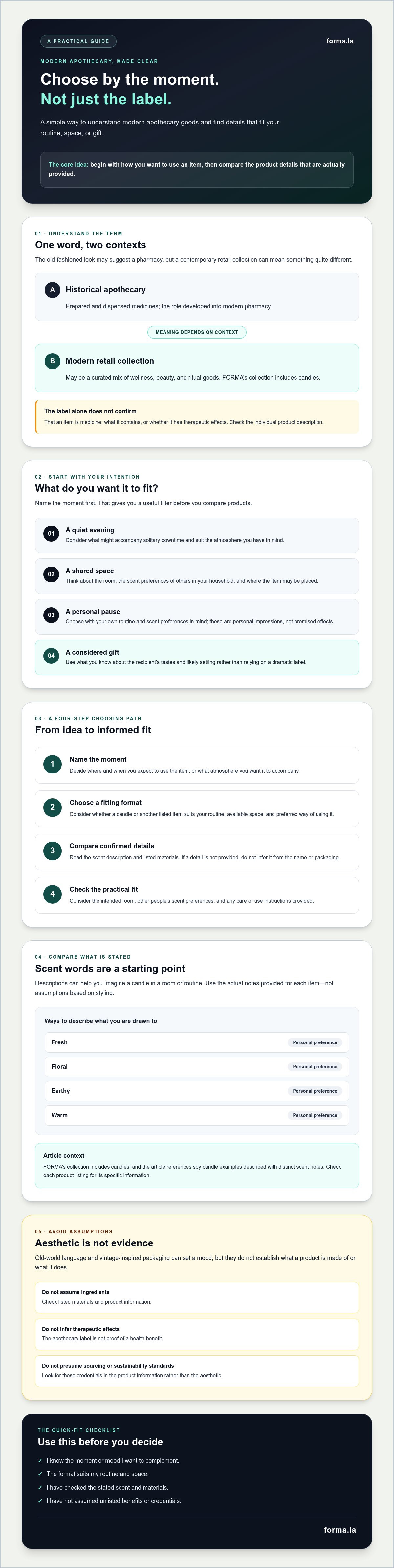
Choosing well is less about buying a whole new routine and more about deciding what you want an item to bring to your day. A quiet moment, a softer evening mood, or a considered gift can each point you toward different details. This guide explains what modern apothecary means and how to narrow your options by use and personal preference. By comparing details such as scent and setting, you can find a piece that feels at home in your space without getting lost in the label.
Key Takeaways
- Choose an apothecary item by the moment or mood you want it to complement, not just its vintage-inspired label.
- Use your intended routine, scent preferences, and product details to narrow the options.
- Compare candle scent descriptions and confirmed materials before deciding what suits your space.
- Check product information rather than assuming ingredients, sourcing standards, or sustainability credentials from the aesthetic.
- Explore FORMA’s curated selection with a clear idea of how you might use an item, either for your own ritual or as a gift.
What Does Apothecary Mean in a Modern Shopping Context?
Traditionally, an apothecary prepared and dispensed medicines. In contemporary retail, the word can describe a curated selection of lifestyle goods chosen for atmosphere, personal care, or ritual. This distinction helps explain the label: a modern collection may draw on the look and language of historic pharmacies without functioning as one.
The name alone doesn’t tell you whether an item is medicine, what it contains, or whether it has therapeutic effects. Read the individual product description and check the details relevant to your intended use. Treat evocative words as an invitation to explore, not as proof of a health benefit or a particular ingredient.
From Historical Pharmacy to Modern Retail
Historically, apothecaries prepared and supplied medicinal compounds, a role that developed into modern pharmacy. For a concise background on the term’s origins and evolution, see the history of the apothecary. Today, retailers may use the word to suggest thoughtfully chosen goods and a ritual-oriented way to browse. The association can set a mood, but it doesn’t establish a product’s purpose or effects.
What Might You Find in a Lifestyle Collection?
There’s no single checklist. One retailer may focus on personal-care goods, while another gathers objects for a home ritual or a particular atmosphere. FORMA’s apothecary collection includes candles, with soy candle examples described using distinct scent notes. That gives shoppers a tangible starting point without suggesting that every retailer carries the same items.
Consider how an item might fit into your day. A candle could accompany a quiet evening or help shape a room’s atmosphere. Its scent description, material details, and intended placement may all inform your choice. For a gift, think about the recipient’s preferences and where they might use it.
Once the category is clear, browsing becomes less about choosing something that simply looks traditional and more about finding a piece that suits your habits. Start with the moment you want to mark, then compare the product details that help you decide whether it belongs in your routine or space.
How to Choose Apothecary Goods That Suit Your Ritual
A considered choice starts with your life, not a product’s styling. Before browsing, picture the moment you want to complement and the practical details that will help an item fit your space. Use this simple rule: begin with intended use, then compare verified product details.
Start With the Moment or Mood You Want to Create
A quiet evening, a welcoming shared space, and a personal reset are different intentions. Naming yours gives you a useful filter: are you choosing something for solitary downtime, a room you share, or a brief pause in your day? Think about scent preferences, too. Fresh, floral, earthy, and warm are useful ways to describe what you’re drawn to, but they’re personal impressions, not promises about how a product will make you feel.
Compare Scent, Format, and Product Information
Once you know the setting, compare the details listed for each item. Scent notes can help you imagine a candle, but rely only on notes the product description actually provides. A name or visual style can’t confirm materials or care requirements. For a brief account of how the historical role developed, the Thackray Museum offers a history of the apothecary, useful context when old-world language appears in modern product names.
Use these steps as you browse:
- 1. Name the moment. Decide where and when you expect to use the item, or what kind of atmosphere you’d like it to accompany.
- 2. Choose a fitting format. Consider whether a candle or another listed item suits your routine, available space, and preferred way of using it.
- 3. Compare confirmed details. Read the scent description and listed materials. If a detail isn’t provided, don’t infer it from the name or packaging.
- 4. Check the practical fit. Consider the intended room, the scent preferences of others in your household, and any care or use instructions provided.
This keeps the decision grounded while leaving room for discovery. When choosing a gift, use the recipient’s known tastes and likely setting as your guide rather than assuming a dramatic label will suit them. A well-matched piece feels considered because it belongs naturally in the moment it’s meant for.
With your preferred mood, format, and key details in mind, take a closer look through FORMA’s apothecary collection and compare the descriptions with your routine.
Apothecary Candle Examples: Compare Scents and Details
A candle’s scent description can help you picture how it might suit a room or routine. Compare the notes that are actually listed, then check the product page for current material and care information. The examples below offer a starting point for weighing earthy, green, floral, and warm scent preferences. They aren’t a promise of how a candle will perform.
Earthy and Green Scent Descriptions
For an earthy direction, P.F. Candle Amber & Moss is described with warm amber and fresh moss notes. P.F. Candle Spruce leans green, with crisp, forest-inspired scent language. Both may appeal if you’re drawn to nature-associated descriptions, but their listed notes give them distinct profiles. Consider which better suits the atmosphere you have in mind.
Floral and Warm Scent Descriptions
Sandalwood Rose Soy Candle combines sandalwood warmth with rose notes in its supplied description. It offers a floral option with a woodsy element to compare against the greener profiles above. No scent is universally best. Your preference, intended setting, and the product information should guide your choice.
| Product name | Supplied scent description | Material detail |
|---|---|---|
| P.F. Candle Amber & Moss Soy Candle | Warm amber and fresh moss | Soy candle, as named in the product title |
| P.F. Candle Spruce Soy Candle | Crisp, forest-inspired scent | Soy candle, as named in the product title |
| Sandalwood Rose Soy Candle | Sandalwood warmth and rose notes | Soy candle, as named in the product title |
Use the table to narrow your scent direction, then read the current listing before deciding. Product names and descriptions can change, and a title isn’t a substitute for checking full material details. Review any care or use instructions on the product page as well. Don’t assume scent strength, burn time, or how far a fragrance will carry unless the description specifically confirms it.
If you’re drawn to green, earthy, floral, or warm notes, explore the apothecary collection and compare the current descriptions with the mood you want in your space.
Common Apothecary Buying Mistakes and How to Avoid Them
A beautiful label can set a tone, but it can’t tell you everything about what’s inside or how an item is intended to be used. Shop with curiosity, then let the product information guide your decision. A short, considered shortlist is more useful than choosing by packaging alone.
Don’t Treat the Label as a Medical Claim
The word apothecary has historical ties to preparing and dispensing medicines, but contemporary retailers may use it for lifestyle goods and ritual objects. The label alone doesn’t mean a product is medicine, has medicinal benefits, or is intended to diagnose, prevent, or treat a health condition. A candle’s scent description, for example, can help you decide whether it suits your preferences, but it shouldn’t be read as a promise of a health effect. For medical questions, consult a qualified healthcare professional rather than relying on retail descriptions.
Look Beyond the Label and Aesthetic
Packaging and evocative language can make browsing pleasurable. They don’t confirm ingredients, sourcing standards, sustainability credentials, craftsmanship, or performance. Check what the individual listing actually says, and treat missing information as unconfirmed rather than filling in the gaps yourself.
Before choosing, review the details that matter:
- Listed materials and ingredients: Check the product description rather than assuming from its name, appearance, or category.
- Scent notes: Use the notes provided to compare options, and consider your preferences and the sensitivities of people sharing your home.
- Care and use instructions: Read any guidance supplied for the item, including details that may affect where or how you use it.
- Fit for your setting: Think about the room, routine, and people around you. A scent that appeals to you may not suit every shared space.
To keep your choice grounded, select a few candidates and ask the same questions about each: Does it suit the moment I had in mind? Are the details I care about clearly stated? Does it feel appropriate for my space? This check can help you distinguish a genuinely fitting find from one that only looks compelling in its packaging.
Ready to compare product details? Browse FORMA’s apothecary collection and use your shortlist to guide your choice.
Find Your Apothecary Fit at FORMA
FORMA is an online boutique curating distinctive lifestyle goods sourced from more than a dozen countries. Its apothecary collection includes candles, offering a focused way to explore how scent and atmosphere might complement a personal routine. Let your preferences lead: the right choice is one that feels at home in your day, not one that asks you to become someone else.
Build a Considered Everyday Ritual
A ritual can be simple and familiar. You might light a candle as you settle in for the evening, or make it part of a quiet moment before a creative task. These small choices can mark a transition or add a personal touch to a routine. They aren’t a promise of a particular wellness outcome; their meaning comes from how you choose to use them.
Keep the idea approachable. Instead of shopping for an idealized daily routine, consider what you already enjoy. Would a scent suit a room where you spend time? Would you remember to use the item, and would it feel pleasant as part of the moment? If you’re curious about shaping a wider practice, a guide to modern ritual supplies can offer more ideas for connecting everyday objects with personal meaning.
Browse With Your Preferences in Mind
As you explore, compare scent descriptions and check each current listing for stated materials and any care or use details. Words such as earthy, floral, or warm can help narrow your options, but only the product description can confirm which notes are listed. For a considered gift, think about the recipient’s taste and where they might use it.
If your routine includes crystals, you might also explore a guide to crystals for meditation for a related perspective. Keep the choices personal and non-prescriptive: an object can serve as a meaningful reminder or fit naturally into a familiar practice without promising an effect.
Take your time, follow the details that matter to you, and look for a piece that suits your everyday life. Browse FORMA's apothecary collection.
Choose a Ritual Essential That Feels Like You
The word apothecary may carry echoes of the past, but choosing a modern ritual essential can be personal and straightforward. Begin with the moment you want to complement, then compare scent, materials, and care details in the product description. A thoughtful choice comes from what suits your routine and space, not from a label or look alone.
FORMA is an online boutique curating distinctive lifestyle goods sourced from more than a dozen countries. Apothecary sits within a broader assortment that includes crystals, décor, stationery, and ritual accessories, with pieces to explore for different parts of daily life.
Let curiosity guide you, and choose something you’ll genuinely enjoy making part of your day. Explore FORMA's apothecary collection and find a natural fit for your own ritual.
Frequently Asked Questions
What does apothecary mean today?
Today, apothecary can mean a curated retail category or shop focused on lifestyle goods, personal care, and ritual. The word has historic roots in preparing and dispensing medicines, but contemporary retailers may use it to evoke thoughtful, old-world curation. The label alone doesn’t tell you a product’s purpose or ingredients, so read the individual description to understand what you’re considering and how it may fit your routine.
What products are in an apothecary collection?
There’s no universal checklist because each retailer curates its selection differently. Candles are one example: FORMA’s apothecary collection includes candles with distinct scent descriptions. Other shops may offer different lifestyle or personal-care goods, so check the category and product listings rather than assuming they all carry the same items. Look for clearly stated materials, scent notes, and use or care details as you browse.
How do I choose an apothecary candle?
Start with where and when you might use it, then compare the scent description with your preferences. You might gravitate toward fresh, floral, earthy, or warm notes. Check the listing for confirmed materials and care instructions rather than inferring details from the candle’s name or packaging. If the candle will be used in a shared space, consider the scent preferences of others in your household too.
Are apothecary products medicinal?
Not automatically. Modern retailers may use the apothecary label for lifestyle goods, and it doesn’t establish that an item is medicine or has therapeutic benefits. A candle described with particular scent notes, for example, shouldn’t be assumed to treat a health concern. Read the product information for its stated purpose and details. For questions about symptoms, treatment, or whether a product is appropriate for you, consult a qualified healthcare professional.
What should I look for in apothecary product descriptions?
Check the details that matter for your intended use: listed materials or ingredients, stated scent notes, product purpose, and any care or use instructions. Don’t assume a product is sustainably made, locally sourced, or crafted in a particular way based on its aesthetic or evocative name alone. If an important detail isn’t provided, treat it as unconfirmed. Comparing a few listings side by side can make differences easier to spot.
Can apothecary goods make a thoughtful gift?
Yes, if the item reflects the recipient’s tastes and how they might use it. A candle can be a considered choice for someone whose scent preferences and home setting you know. Before selecting one, check the listed scent and materials, and consider whether the fragrance would suit a shared space. Choose for the person’s real habits and preferences, rather than an imagined routine, to make the gift feel personal.
How is a modern apothecary different from a pharmacy?
A pharmacy is associated with the dispensing of medicines, while a modern retail apothecary may curate lifestyle goods for atmosphere, personal care, or ritual. The shared word reflects a historical connection, not necessarily the same purpose today. A retailer using the term isn’t automatically a pharmacy, and its products aren’t automatically medicines. Check the specific product information, and rely on a pharmacy or qualified healthcare professional for medication questions.