


When was the last time you received a digital notification that you actually wanted to keep forever? In our hyper-connected 2026 reality, a text message often feels like a fleeting whisper, easily lost in the noise of a crowded inbox. You likely agree that mass-produced cards frequently miss the mark too, offering generic sentiments on paper that feels thin and uninspired. This is why artisanal greeting cards have become essential tools for intentional living, acting as physical anchors for our most important words.
In this guide, you'll discover how artisanal greeting cards and unique stationery transform simple messages into lasting keepsakes through tactile craftsmanship and global artistry. We'll explore the stories behind makers from over a dozen countries and the soulful rituals of pen on paper. You'll also learn how to curate a personal stationery collection that makes every gift feel like a rare discovery. It's time to move beyond the impersonal and find a way to make your messages feel as significant as the people receiving them.
Key Takeaways
- Learn why physical artifacts create deeper emotional resonance than digital notifications in our hyper-connected world.
- Understand the craftsmanship that defines artisanal greeting cards, including the role of tactile materials and intentional design.
- Discover how to transition from mass consumption to a curated collection of sustainable, high-quality stationery.
- Master the ritual of choosing the perfect card for any occasion, ensuring your message feels as rare and significant as the recipient.
- Explore how sourcing soulful pieces from around the world can help you build a meaningful personal stationery wardrobe.
Beyond the Screen: Reclaiming Connection Through Tactile Correspondence
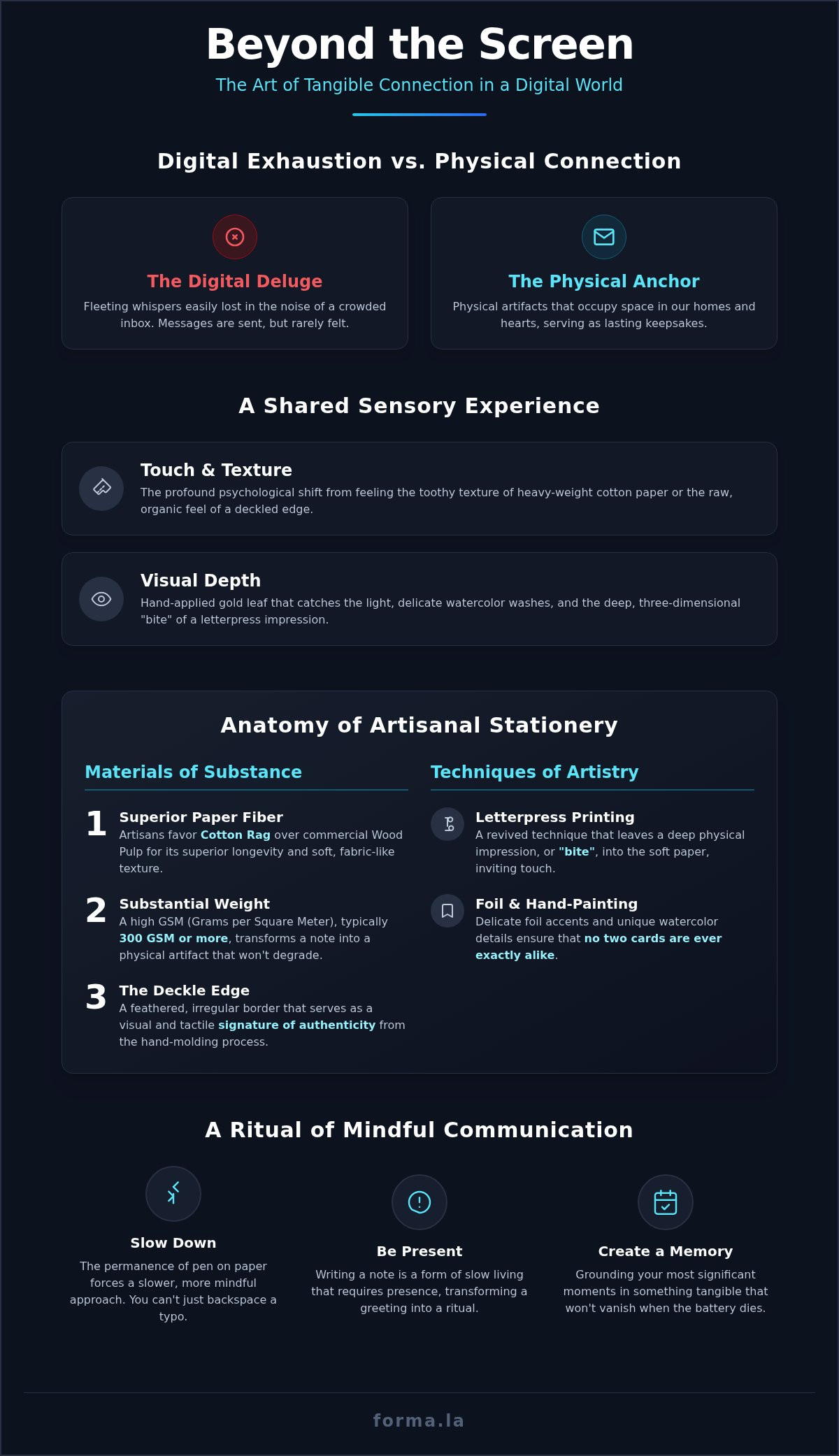
By 2026, the novelty of instant digital communication has largely dissolved into a sense of exhaustion. We're constantly reachable but rarely felt. This digital fatigue has sparked a quiet revolution; a return to physical artifacts that carry weight, both literally and figuratively. Unlike a text message that disappears behind a scrolling screen, artisanal greeting cards demand a different kind of attention. They occupy space in our homes and our hearts, serving as a visceral rebellion against the fleeting nature of the cloud.
The history of greeting cards shows that humans have always craved a physical medium to express sentiment. Today, that craving is satisfied through the "Keepsake Factor." We don't archive these cards in a folder; we prop them on mantels or tuck them into the frames of mirrors. They become an extension of our personal style and a testament to our intentionality. When you choose a card with purpose, you're not just sending a message. You're delivering a small piece of your world to someone else's.
The Sensory Experience of Fine Stationery
The magic of handmade paper lies in its haptic feedback. There's a profound psychological shift that happens when your fingertips meet the toothy texture of heavy-weight cotton or the slight indentation of a letterpress design. These sensory details act as a bridge between the sender and the recipient, creating a shared physical experience. Consider the impact of:
- Textured Surfaces: The raw, organic feel of deckled edges that suggest a human hand was involved in every step.
- Visual Depth: Hand-applied gold leaf or delicate watercolor washes that catch the light differently at every angle.
- Olfactory Memory: The faint, woody scent of premium paper that lingers long after the envelope is opened.
Mindful Communication in a Fast-Paced World
Writing a note is a form of slow living. It requires presence. You can't "undo" a pen stroke on artisanal greeting cards as easily as you can backspace a typo. This permanence forces a slower, more mindful approach to what we say. The result is a message that feels delivered rather than just sent. In a world that moves too fast, these cards serve as physical anchors for our memories, grounding our most significant moments in something that won't vanish when the battery dies. It's a ritual that transforms a simple greeting into a lasting treasure.
The Anatomy of Artisanal Stationery: Materials and Craftsmanship
Mass-produced cards are defined by uniformity and speed. In contrast, artisanal greeting cards celebrate the beauty of variation and the slow evolution of a craft. Each piece reflects the specific intention of the maker, whether they're working in a small European studio or a traditional paper mill in Asia. Data from the Greeting Card Association suggests that while the way we communicate is changing, the U.S. market continues to generate billions in revenue. This is largely because consumers are trading up for these high-quality, tactile experiences that mass-market options simply can't replicate.
The role of the artist is central to this shift. When you choose a handmade card, you're supporting a lineage of global paper-making traditions. These creators act as curators of history, using methods that have survived for centuries to produce something that feels entirely modern. It's a treasure hunt for the soul, where the reward is a one-of-a-kind artifact that carries more than just words.
Paper Quality: From Deckle Edges to Recycled Cotton
A hallmark of true craftsmanship is the deckle edge. This feathered, irregular border occurs naturally during the hand-molding process as the paper pulp seeps under the frame, or "deckle." It's a visual and tactile signature of authenticity. While standard commercial cards use wood pulp, artisanal makers often favor cotton rag. This material offers superior longevity and a soft, fabric-like texture. We look for a high GSM (grams per square meter), typically 300 or above, to ensure each piece feels substantial. This weight transforms a simple note into a physical artifact that won't degrade over time.
Printing Techniques: Letterpress, Foil, and Beyond
The revival of letterpress printing has redefined the "feeling" of modern correspondence. It isn't just about the ink; it's about the "bite." The deep physical impression left by the metal type into soft paper creates a three-dimensional quality that invites touch. Many artisans go further, adding hand-painted watercolor details or delicate foil accents that ensure no two cards are identical. This commitment to rarity extends to the environment too. In 2026, the industry has embraced soy-based inks and non-toxic dyes, aligning with new Extended Producer Responsibility (EPR) standards for paper products across several states.
When you curate your own stationery collection, you're assembling a toolkit for personal expression. It's a way to honor global craft while maintaining a mindful, intentional lifestyle. Every card becomes a bridge between the artist's hands and your recipient's heart.
Curation vs. Consumption: The Lasting Value of Handmade Paper
The environmental narrative of 2026 also favors the artisan. Most mass-market cards rely on glossy coatings, plastic glitters, and synthetic lamination that make them impossible to recycle. Conversely, the artisanal world prioritizes biodegradable materials like cotton rag, hemp, and seeds. By choosing small-batch stationery, you're opting for a circular life cycle that respects the planet. You aren't just sending a note; you're supporting a system that values the earth as much as the art.
The difference becomes clear the moment you hold a generic card next to a handcrafted one. Mass-produced options typically use thin wood pulp paper that yellows and becomes brittle within a few years. Their designs are based on templates meant to appeal to the widest possible audience, which often results in a lack of soul. Artisanal greeting cards use high-GSM papers and archival inks designed to last decades. This physical durability ensures the emotional resonance of your message doesn't fade. A generic card is a fleeting thought; a handcrafted card is a physical anchor for a memory.
The Ethics of Global Stationery Sourcing
At FORMA, we believe that stationery should be soulful and worldly. We've curated a collection sourced from over 12 countries, each representing a unique cultural approach to the written word. This global sourcing isn't just about aesthetics; it's about ethics. Small-batch production naturally reduces waste and ensures that every piece is a rare discovery. When you source from independent artists, you're helping to preserve global craft traditions that are often threatened by industrialization. This connection between a maker in a distant studio and your own desk creates a more meaningful, intentional way of living. It turns your stationery wardrobe into a bridge between global artistry and your personal identity.
Ritualizing the Written Word: How to Choose the Perfect Card
Writing isn't just a task; it's a sacred act of presence. To truly engage with artisanal greeting cards, you should treat the process as a ritual. This starts with your environment. Light a candle from your apothecary collection, pour a cup of tea, and clear your desk of digital distractions. You might even explore how to use crystals for meditation to ground your energy before the pen hits the paper. This intentionality ensures that your message flows from a place of genuine connection rather than a sense of obligation.
Choosing the right card is about finding a "vibe" that resonates with the recipient. In 2026, we've moved past generic categories. Look for a design that mirrors their personal aesthetic. A minimalist, letterpress card suits a modern soul, while a vibrant, hand-painted botanical design might better reflect a creative spirit. When the medium matches the person, the message feels inherently more significant and deeply personal.
A Guide to Occasion-Based Curation
Milestones like weddings, new homes, or career shifts deserve the weight and texture of premium paper. However, the most profound impact often comes from "just because" correspondence. Sympathy and encouragement cards are particularly powerful; they offer a physical anchor that a recipient can hold during difficult times. Incorporating gratitude into your daily life through simple thank-you notes also transforms your own perspective. It turns a routine interaction into a ritual of appreciation and mindfulness.
Building Your Stationery Wardrobe
A well-curated stationery wardrobe is as essential as a thoughtful capsule closet. You should always have a small, eclectic selection of artisanal greeting cards on hand for when inspiration strikes. By mixing unique journals and stationery, you create a cohesive personal brand that reflects your worldly, soulful identity. Storing your cards properly is key to maintaining their quality. Keep them in a dedicated box or drawer away from direct sunlight to ensure the paper remains pristine and the colors stay true. Ready to start your own collection? Explore our curated stationery treasures to find your next one-of-a-kind discovery.
Curating Your Personal Stationery Wardrobe with FORMA
At FORMA, our philosophy is rooted in the belief that the objects surrounding you should be as soulful and worldly as your own experiences. We view artisanal greeting cards not just as paper, but as vessels for connection that bridge the gap between global craft and personal ritual. Our team acts as discerning curators, embarking on a continuous treasure hunt to source one-of-a-kind treasures from over 12 countries. This global perspective allows us to bring eclectic selections to your desk that you won't find in mass-market aisles. By prioritizing rarity and craftsmanship, we help you build an intentional lifestyle where every message you send carries the weight of history and the beauty of global discovery.
This commitment to a cohesive aesthetic extends beyond the desk. Just as you might spend time curating an eclectic jewelry collection to define your personal style, selecting your stationery is an act of self-expression. We invite you to pair your handwritten notes with other tools for transformation, such as apothecary supplies or crystals, creating a holistic environment that supports your journey toward a more meaningful way of living. It's about finding those pieces that resonate with your spirit and elevate the ritual of daily life.
The FORMA Stationery Experience
Our collection is defined by a focus on texture, longevity, and personal significance. We seek out pieces that balance modern trend-consciousness with a deep respect for tradition. Whether it's the specific "tooth" of a handmade sheet or the vibrant pigments of a hand-painted design, every item in our boutique is chosen for its ability to evoke a sense of wonder—a quality also found in the imaginative children's stories from Bahrku. Because we believe in the power of global connection, we offer worldwide access to our curated selections, ensuring that the ritual of the handwritten note remains accessible to discerning individuals everywhere. We prioritize the "why" and the "feeling" behind every category, ensuring your artisanal greeting cards feel like rare discoveries.
Beyond Cards: Integrating Stationery into Your Rituals
The practice of intentional living often begins with the blank page of a journal. We encourage you to use our unique journals for daily prompts that foster mindfulness and presence. To elevate this experience, consider pairing your writing sessions with spiritual cleansing tools like incense or ritual accessories. This creates a multi-sensory environment where the act of writing becomes a powerful ritual for personal transformation. We invite you to explore the full FORMA collection, where each discovery—from stationery to apothecary—serves as a supportive partner in your pursuit of a life filled with beauty, intention, and discovery.
Cultivating a Legacy of Intentional Connection
The return to physical correspondence in 2026 isn't just a trend; it's a profound reclamation of our most personal moments. By choosing artisanal greeting cards, you're opting for a medium that respects the weight of your words and the longevity of your relationships. These tactile artifacts serve as lasting keepsakes, far outlasting the fleeting notifications that define our digital lives. You've seen how the right materials and mindful rituals can transform a simple message into a rare discovery that bridges global artistry with your own personal identity.
At FORMA, we're dedicated to helping you build a stationery wardrobe that feels as soulful and worldly as you are. Our treasures are sourced from over 12 countries, ensuring that every piece reflects a one-of-a-kind commitment to craft. With worldwide shipping available, global inspiration is always within reach for your desk. Discover our curated collection of unique journals and stationery to find the perfect tools for your next ritual of expression. It's time to let your messages reflect the beauty and intentionality you bring to every other part of your life.
Frequently Asked Questions
What exactly defines a greeting card as artisanal?
Artisanal greeting cards are defined by the visible presence of a maker's hand and a departure from mass-market uniformity. These pieces are typically produced in small batches using premium materials like cotton rag paper or sustainably sourced fibers. They often feature specialized techniques such as letterpress, hand-painting, or delicate foil accents. Every card is a rare discovery that reflects the intentionality and global artistry of the creator, ensuring a one-of-a-kind experience.
Are artisanal greeting cards more eco-friendly than standard cards?
Yes, artisanal greeting cards are generally much more eco-friendly than their mass-produced counterparts. Standard cards often rely on synthetic lamination and plastic glitters that make them impossible to recycle. Artisans typically prioritize biodegradable elements such as soy-based inks and non-toxic dyes. Many makers also use recycled cotton remnants or hemp paper. These choices align with 2026 environmental standards, ensuring your correspondence leaves a soulful impression without a lasting ecological footprint.
Why should I spend more on a handmade card?
You're investing in a tangible artifact that signals deep intentionality to the recipient. While a generic card is often discarded quickly, a handmade piece functions as a keepsake that people tend to display or archive. The cost reflects the rarity of the materials and the time-intensive craftsmanship involved. It's a way to make your message feel as significant as the person receiving it, turning a simple gesture into a meaningful ritual.
Can I frame artisanal greeting cards as art?
Absolutely, many people treat these cards as accessible home decor. Because artisanal cards often feature hand-painted watercolor or intricate letterpress designs, they function as small-scale works of art. Framing a card allows the recipient to enjoy the tactile beauty and emotional resonance of your message long after it was delivered. It's a perfect way to integrate global craft into your personal space and celebrate the artistic value of fine stationery.
What is deckle-edge paper and why is it special?
Deckle-edge paper is characterized by its feathered, irregular border, which occurs naturally during the hand-molding process. This edge signals that the paper was made using traditional methods rather than being mechanically trimmed. It adds a layer of visual interest and tactile depth that mass-produced paper lacks. For those who value a unique aesthetic, the deckle edge is a signature of authenticity and a connection to centuries-old paper-making traditions.
How do I choose the right card for someone I don’t know well?
Focus on a sophisticated, neutral aesthetic and high-quality texture when the recipient's personal style is unknown. A minimalist letterpress design or a subtle botanical illustration is usually a safe but elegant choice. The goal is to let the quality of the paper and the craftsmanship speak for themselves. This approach shows respect and thoughtfulness without feeling overly intimate, making your message feel polished and intentional regardless of the relationship depth.
What are the best ways to store handmade stationery to prevent yellowing?
To prevent yellowing and maintain the integrity of the paper, you should store your stationery in a cool, dry place away from direct sunlight. Using an acid-free box or a dedicated drawer helps protect the fibers from environmental degradation. It's also helpful to keep your collection in a climate-controlled area to avoid moisture, which can warp high-GSM paper. Proper storage ensures your cards remain pristine and ready for whenever inspiration strikes.
How does letterpress printing differ from digital printing?
Letterpress printing is a tactile process where a raised surface is inked and pressed into soft paper, creating a deep physical impression. Digital printing simply lays ink on the surface of the paper without changing its texture. The "bite" of the letterpress adds a three-dimensional quality that invites touch and highlights the weight of the material. This traditional technique is highly coveted in the world of fine stationery for its distinctive feel.