


What if your meditation space didn't have to look like a minimalist showroom to be truly sacred? Many of us feel the weight of unspoken rules when we think about creating a meditation altar at home. You might worry about whether your crystals are in the right place or if your ritual tools are correct enough to invite peace. It's natural to struggle with the balance between a beautiful aesthetic and a functional spiritual practice. You want a dedicated corner that feels like a soulful reflection of your journey, not a shelf of unnecessary objects.
This guide helps you strip away the noise and focus on what resonates. You'll discover how to transform a simple corner into a personalized sanctuary using intentional ritual accessories and mindful design. We'll explore how to curate a collection of tools, from energetic anchors like selenite towers to apothecary staples that ground your senses. We also look at how boutique stationery can turn fleeting insights into lasting wisdom. By the end, you'll have clarity on how to use these treasures to build a daily ritual that feels both timeless and uniquely yours.
Key Takeaways
- Define your sacred space as a soulful anchor for your intentions rather than a static decorative display.
- Discover the essential steps for creating a meditation altar at home that balances your personal aesthetic with functional ritual tools.
- Learn how to curate crystals and natural treasures that serve as meaningful energetic foundations for your spiritual journey.
- Master the art of sensory harmony by using apothecary supplies and intentional color palettes to cultivate deep tranquility.
- Establish a sustainable rhythm for your sanctuary by integrating boutique stationery and mindful cleansing practices into your daily life.
Defining the Sacred: What is a Meditation Altar?
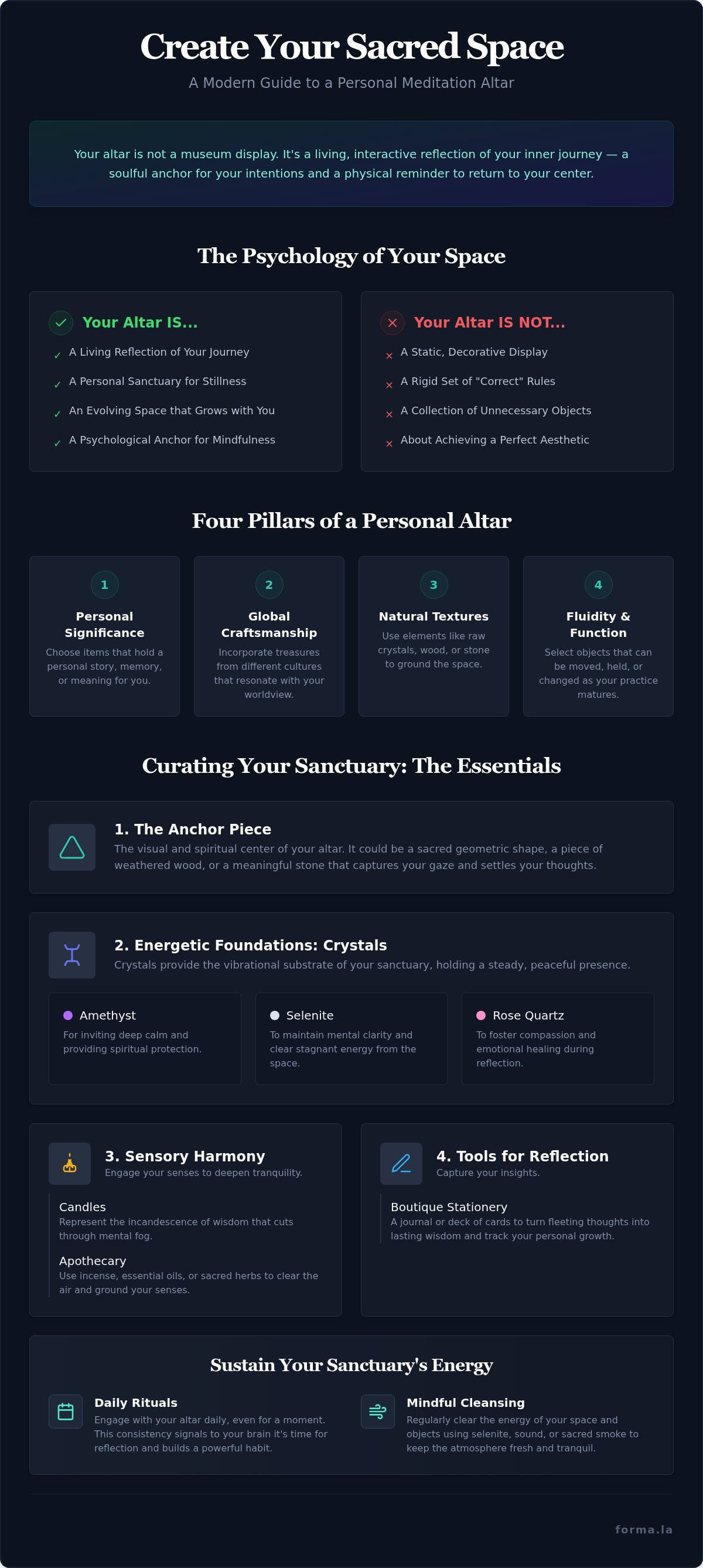
An altar is more than a shelf of beautiful objects; it's a dedicated physical space that anchors your spiritual intentions. A meditation altar is a personalized portal for daily mindfulness. When you're creating a meditation altar at home, you aren't building a static museum display. Instead, you're curating a living, interactive reflection of your internal journey. It serves as a visual reminder to pause, breathe, and return to the present moment. Unlike a rigid exhibition, an altar evolves alongside your practice, shifting as your intentions grow and change. It becomes a tactile representation of your commitment to self-discovery, holding space for both your silence and your growth.
The Psychology of a Dedicated Space
Our brains thrive on environmental cues. When you enter a specific area dedicated solely to reflection, your nervous system begins to recognize the shift. This consistency in location is vital for habit formation. By carving out a physical boundary between the chaos of daily life and your internal stillness, you signal to your mind that it's safe to let go. This dedicated corner becomes a sanctuary where the outside world fades. Even when you aren't sitting in formal meditation, the mere sight of your altar acts as a grounding force. It functions as a psychological anchor, pulling you back into your center during a busy day.
Eclectic vs. Traditional Altars
You don't need to follow rigid rules to find spiritual depth. Modern mindfulness is about personal resonance. While traditional setups have their place, many find more meaning in an eclectic approach. This means blending global influences with modern aesthetics to create something truly unique. Creating a meditation altar at home should feel like a soulful discovery. Trust your intuition when selecting ritual tools. Whether it's a specific crystal that catches your eye or a piece of boutique stationery for your morning reflections, the most powerful items are those that speak to your individual journey. Consider these elements when choosing your pieces:
- Personal Significance: Items that hold a story or a specific memory.
- Global Craftsmanship: Treasures sourced from different cultures that resonate with your worldview.
- Natural Textures: Elements like raw crystals or wooden bowls that ground the space in the physical world.
- Fluidity: Objects that can be moved, held, or changed as your practice matures.
Look for treasures that hold history or unique craftsmanship. Your altar shouldn't feel mass-market; it should feel like a collection of meaningful artifacts sourced with intention. For those drawn to the dignity of traditional sacred spaces, you can explore Clerical Garments & Vestments to see how ecclesiastical artistry can inspire a sense of reverence. By prioritizing what feels authentic over what is "correct," you create a space that truly supports your personal transformation.
Selecting Your Anchor Pieces: Ritual Accessories for Meditation
When creating a meditation altar at home, the central piece acts as the visual and spiritual gravity of the space. This anchor doesn't have to be a traditional deity. It could be a sacred geometric shape or a natural treasure, like a hand-picked stone or a piece of weathered wood. The goal is to choose something that captures your gaze and settles your thoughts instantly. Candles play a crucial role here as well, representing the incandescence of wisdom that cuts through the mental fog of a busy day. To prepare the environment, many practitioners incorporate modern ritual supplies to clear the air and ground the energy before they begin their sit. This intentionality is the secret to creating a meditation altar at home that truly resonates.
Crystals as Energetic Foundation
Crystals are the vibrational substrate of your sanctuary. Selecting stones depends on the specific energy you wish to cultivate. Arranging these in clusters helps create a rhythmic flow, guiding the eye across the altar in a way that feels organic. These natural anchors hold the space even when you aren't there, maintaining a steady, peaceful presence in the room. Consider these stones for your foundation:
- Amethyst: For inviting deep calm and spiritual protection.
- Selenite: To maintain clarity and clear stagnant energy from the space.
- Rose Quartz: To foster compassion and emotional healing during reflection.
If you're looking for a deeper dive into specific properties, you can explore this detailed look at how to use crystals for meditation to find your perfect match. Each stone becomes a physical touchstone for your internal state, grounding the intangible aspects of your practice into something you can see and feel.
The Power of Ritual Tools
Sound and movement bridge the gap between our physical actions and our internal state. Using singing bowls or small bells signals a clear boundary, marking the transition from the noise of the world to the silence of the self. Offering bowls also play a significant role. They might hold fresh water, seasonal flowers, or a pinch of incense, serving as a gesture of gratitude. There's a profound satisfaction in selecting tools that feel heavy and intentional in the hand. This physical weight reminds you of the significance of the moment. You might find that a curated ritual accessory helps you feel more connected to the process, turning a simple habit into a soulful experience that nourishes the spirit and honors the ritual of daily life.
Sensory Harmony: Balancing Aesthetic and Atmosphere
Creating a meditation altar at home is a holistic endeavor that engages every sense. While your anchor pieces provide the foundation, the atmosphere is what sustains your practice. Sight is often the first sense we engage. Using color palettes that evoke tranquility, such as muted earth tones, soft neutrals, or deep ochres, helps settle the mind instantly. Scent follows closely, acting as a bridge to the subconscious. Incorporating apothecary supplies isn't just about fragrance; it's about the ritual of clearing the air and signaling a shift in consciousness. Sound and silence also play their parts. The resonance of a bell or the deliberate quiet of a dedicated space shapes the auditory environment. Finally, tactile elements like raw stone, polished wood, or soft textiles add a physical weight to your experience, reminding you of the earth beneath you as you turn inward.
Apothecary and Scent
Using natural incense or essential oils marks the beginning of your sacred time. This isn't merely a decorative choice; it's a functional tool for emotional regulation. The ritual of "clearing the space" before you sit helps remove the mental residue of the day, creating a clean slate for your meditation. You might choose a grounding wood smoke scent when you feel scattered, or a bright, citrus-based oil when you need a sense of renewal. By selecting scents that align with your current emotional needs, you turn your altar into a responsive sanctuary that meets you exactly where you are.
Visual Layers and Textures
Visual interest comes from depth rather than clutter. When you're creating a meditation altar at home, you can use small trays or hand-woven textiles to define the physical boundaries of the space. This creates a "home within a home" for your ritual accessories. The art of "stacking" objects, such as placing a small crystal atop a beautiful book or a bell on a wooden plinth, creates a sense of history and discovery. However, balance remains vital. You must leave "empty space" to allow the eyes to rest and the energy to move. A crowded altar can feel as overwhelming as a crowded mind. Aim for a curated collection where every piece has room to breathe, ensuring that the aesthetic remains as calm as the practice it supports.
Building Your Altar: A Step-by-Step Guide to Assembly
Building your sanctuary is an unhurried, rhythmic process. It's the moment where abstract intentions become physical reality. When you're creating a meditation altar at home, the act of assembly is your first formal ritual. It requires presence and a discerning eye for detail. Rather than rushing to fill a surface, treat each placement as a deliberate choice. You are curating a landscape for your mind to rest within, often using treasures sourced from over a dozen countries to anchor your spirit. This process isn't about following a checklist; it's about listening to the resonance of each object as it finds its place.
Finding the Right Location
The physical location dictates the longevity of your practice. A quiet, low-traffic area with natural light is ideal, but don't let a lack of square footage deter you. A single floating shelf or a small corner of a dresser can be just as effective as a dedicated table. The most important factor is eye level. When you're in your seated position, your central anchor should sit naturally within your line of sight. This prevents physical strain and keeps your focus effortlessly forward. If you're working with a minimalist footprint, focus on one or two high-impact pieces, like a single selenite tower, that carry significant personal weight.
The Cleansing Ritual
Before any objects are placed, the environment must be prepared. This is both a physical and energetic reset. Wipe down your chosen surface with intentionality, acknowledging the space as it transitions from a mundane furniture piece to a sacred site. You can use sound or smoke from your apothecary supplies to clear any lingering energy. As you do this, set a specific intention for what you want this space to hold. Once the air feels light and the surface is clean, you can begin the layering process:
- Position the Anchor: Place your largest piece, such as a statue or geometric shape, in the center to establish a focal point.
- Layer Accessories: Arrange your crystals and smaller ritual tools around the center, moving outward to create a sense of expansion.
- Test the Flow: Sit in your meditation posture. Observe if the arrangement feels cluttered or if it invites a sense of calm.
Creating a meditation altar at home is an evolving art. If the energy feels stagnant after a few weeks, don't be afraid to clear everything and start again. Each new assembly offers a chance to rediscover your practice. To find the perfect pieces for your next arrangement, explore our collection of hand-selected ritual tools that bridge the gap between global discovery and personal sanctuary.
Sustaining the Energy: Daily Rituals and Intentional Care
An altar is never truly finished. It's a living reflection of your internal journey, breathing and shifting alongside your practice. While creating a meditation altar at home provides the initial spark, sustaining its energy requires a commitment to intentional care. Your daily interaction with the space is what transforms a collection of objects into a soulful sanctuary. This might begin with the simple act of lighting a candle or clearing the air with apothecary essentials, signaling to your nervous system that the work has begun. Cleaning the space also becomes a ritual in itself. Wiping down surfaces or gently refreshing your crystals isn't a mundane chore; it's an act of devotion that keeps the energetic foundation clear and bright.
When you're creating a meditation altar at home, you aren't just setting up furniture; you're inviting a living energy into your life. This energy needs movement to stay potent. If you notice your gaze sliding over your altar without really seeing it, that's a sign the space has become static. Interaction is the antidote to stagnation. Touch your ritual tools, rearrange your stones, and let the space be as dynamic as your own thoughts. By treating the altar as a partner in your growth, you ensure it remains a powerful anchor for your daily sits.
Journaling as a Ritual Extension
Keeping a dedicated journal at your altar allows you to capture the fleeting insights that arise during silence. Using unique boutique stationery makes the act of writing feel special, turning post-meditation reflections into a cherished part of the process. This isn't just about recording thoughts; it's about tracking your evolution. Looking back through your notes, you'll see how your practice has matured alongside the physical changes of your sanctuary. The paper becomes a witness to your internal discovery, holding the history of your transformation in a tangible form.
The Seasonal Altar
To keep your practice from feeling stagnant, allow your sanctuary to evolve with the world outside. Adding elements from nature, such as a fallen leaf in autumn or a fresh bloom in spring, keeps you connected to the earth's cycles. You might also rotate your crystals based on personal goals or moon phases. Swapping a grounding stone for one that encourages clarity can shift the entire vibration of the room. An ever-changing altar ensures that the space remains a dynamic partner in your journey, inviting you to return with a sense of discovery every single day. These small shifts honor the ritualistic aspects of life, grounding modern trends in the enduring quality of the natural world.
Your Journey Toward Stillness Begins Here
Creating a meditation altar at home is a profound act of self-expression that grounds your spiritual intentions in the physical world. By selecting anchor pieces that truly resonate and balancing sensory elements like scent and texture, you build a sanctuary that supports your daily return to center. Remember that your altar is a living reflection of your growth. It should evolve as you do, shifting with the seasons and your changing needs. This dedicated corner becomes a visual promise to yourself; it's a place where the noise of the world finally fades into the background.
Whether you're drawn to the grounding weight of a raw crystal or the delicate ritual of lighting incense, your tools should feel as intentional as your practice. We offer unique, one-of-a-kind treasures sourced from over 12 countries to help you find that perfect resonance. With worldwide shipping for intentional living, your next sacred anchor is closer than you think. Discover our curated collection of ritual tools and treasures and begin the soulful process of curating your own dedicated space. Trust your intuition as you build this bridge to your inner stillness.
Frequently Asked Questions
What are the most essential ritual accessories for meditation for a beginner?
A beginner needs a central anchor, a candle, and a cleansing tool. Start with a single selenite tower for clarity or a rose quartz cluster for compassion. Adding a simple candle represents wisdom; a small dish for apothecary items like natural incense helps clear the space. You don't need a crowded table to begin. Focus on three pieces that evoke a sense of peace and intention when you look at them.
Do I need to follow a specific religion to create a home altar?
You don't need to follow any specific religious path to find value in creating a meditation altar at home. While altars have deep roots in many spiritual traditions, a modern home altar is a personal reflection of your own journey. It acts as a psychological and energetic anchor for mindfulness. You can blend global influences with your personal aesthetic to create a secular sanctuary that honors your unique path toward inner stillness.
Where is the best place in a house to set up a meditation altar?
The best location is a quiet, low-traffic area where you feel safe and undisturbed. Natural light is a beautiful addition, but a dark corner can feel equally cozy and introspective. Look for a spot where you can sit comfortably with the altar at eye level. This might be a dedicated shelf in your bedroom, a corner of your home office, or even a cleared space on a sturdy dresser.
How often should I clean or reset my meditation altar?
Clean the physical surface weekly and reset the energy whenever the space feels stagnant. Dusting your ritual accessories with a soft cloth is a mindful practice in itself. Many practitioners choose to reset their altar with the moon phases or the changing seasons. If you find your attention drifting or the space no longer inspires you, clear everything and start the assembly process again with fresh, updated intentions for your practice.
Can I include personal items like photos on my meditation altar?
Personal items like photos, heirlooms, or found objects from nature add deep personal resonance to your space. An altar is a living reflection of your story, not just a display of curated goods. You might include a photograph of a teacher printed on a sustainable wood block from WoodSnap, a stone from a favorite beach, or a handwritten note. These items serve as anchors for your memory and heart, making the sanctuary feel truly yours and deeply authentic.
A shrine is typically a place of honor for a specific deity or ancestor, while a meditation altar is an interactive tool for your personal practice. Shrines often focus on external devotion. In contrast, an altar is designed to facilitate internal reflection and mindfulness. While the two can overlap, an altar is specifically curated to ground your energy and provide a focal point for your daily meditation sessions and ongoing self-discovery.
How do I choose the right crystals for my sacred space?
Choose crystals based on the specific energy you want to invite into your life. Amethyst is excellent for promoting calm, while clear quartz amplifies your general intentions. If you feel scattered, black tourmaline or smoky quartz provide much-needed grounding. Trust your intuition during the selection process. If a specific stone draws your eye or feels right in your hand, it's likely the energetic anchor you need for your current spiritual journey.
What should I do if I only have a very small space for an altar?
A minimalist altar on a single floating shelf or a small tray is incredibly effective for creating a meditation altar at home. You don't need a large table to anchor your intentions. Use a condensed style with a few small crystals, a single candle, and a piece of boutique stationery for your reflections. This small version keeps your focus sharp and proves that sacred space is about intentionality rather than physical square footage.